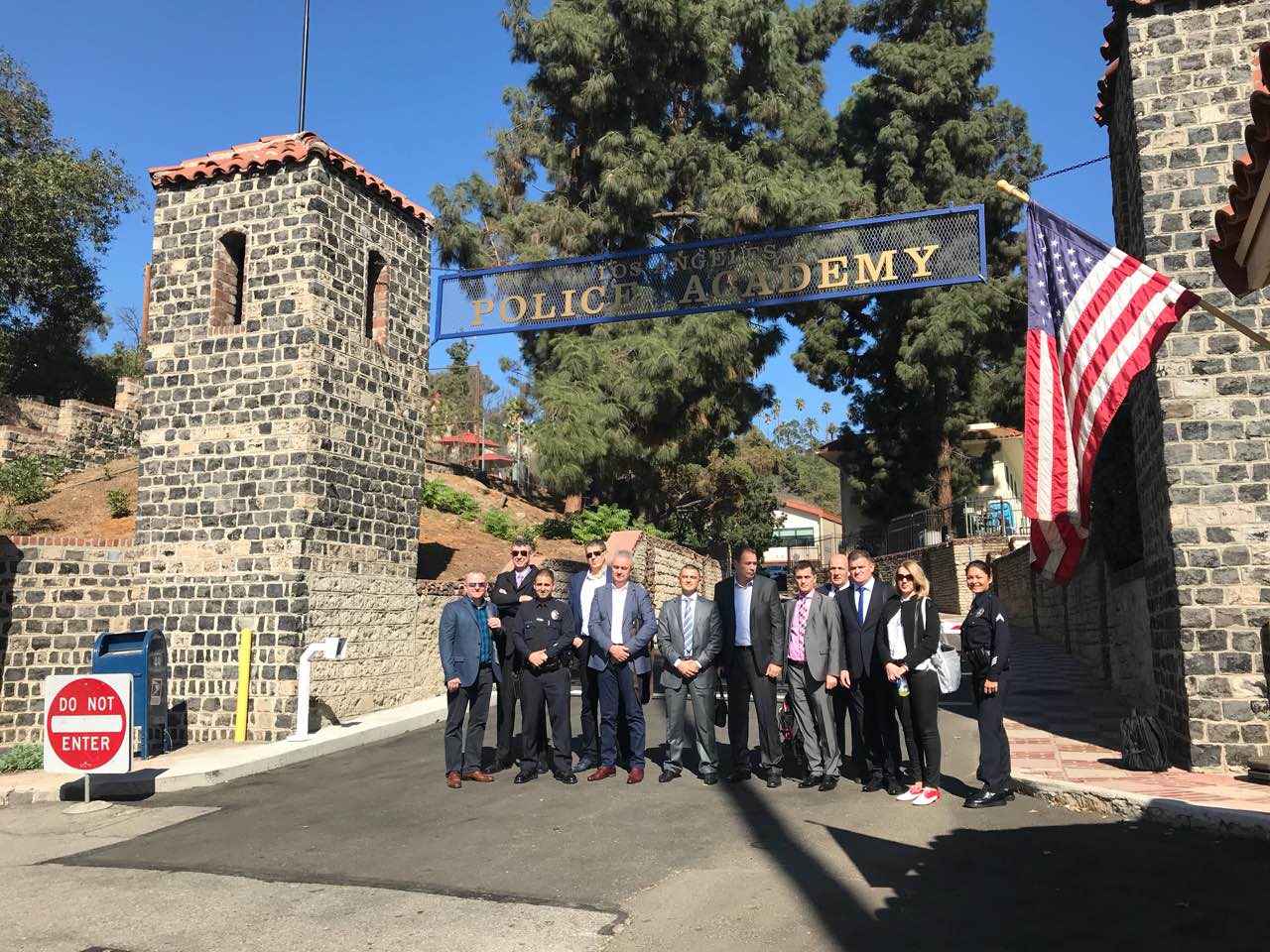
Study visit to LAPD
14/11/2017
Branko Vukoja, Director of the Agency for Education and Professional Training, visited Los Angeles in the period November 6-11, 2017, as part of a visit organized by the International Criminal Investigative Training Assistance Programme operating within U.S. Department of Justice. The focus of this study visit to the Los Angeles Police Department (LAPD) was on the professional development of police officers responsible for community policing, in view of the fight against violent extremism in schools. The police leaders of Bosnia and Herzegovina were presented the programmes and strategies that are successfully implemented in the United States of America, which could, in a modified form, be applied to Bosnia and Herzegovina as well.
The BiH delegation members, along with Director Branko Vukoja, were: Perica Stanić, Director of SIPA, Slobodan Ujić, Director of Service for Foreigners' Affairs, Mirsad Vilić, Director of Directorate for the Coordination of Police Bodies, Nusret Beširević, Director of FMoI Police Academy, Darko Ćulum, Director of the RS Police, Mile Šikman, Head of Police Education Administration of RS MoI, Robert Perić, Head of Field Office South of the Border Police of BiH, Ivica Milić, Head of the Team for Analytics in the FPA Support Sector, Goran Pisić, Head of the Brčko District Police Department and Emir Sijeričić, Commander of the Support Unit of the Sarajevo Canton MoI.
The delegation of Bosnia and Herzegovina, as part of the visit to the Los Angeles Police Department, visited the Special Weapons and Tactics Section, Counter-Terrorism and Special Operations Bureau, Admin-Training Department, Mental Evaluation Unit and Crisis Response Support Section.
Following this study visit, ICITAP plans to support the establishment and activities of working groups that are tasked to identify the most vulnerabgle communities, schools and groups of students. In addition, ICITAP will initiate activities to prevent extremism, violence in schools, recruitment of young people by terrorist organizations and radicalisation of young people through the Internet and social networks.
Povezane vijesti
-
 ,
,  ,
,  ,
,  ,
,  ,
,  ,
,  ,
,  ,
,  ,
,  ,
,  ,
,  ,
,  ,
,  ,
,  ,
,  ,
,  ,
,  ,
, 
-
 ,
,  ,
,  ,
,  ,
,  ,
,  ,
,  ,
,  ,
,  ,
,  ,
,  ,
,  ,
,  ,
,  ,
,  ,
,  ,
,  ,
,  ,
,  ,
,  ,
, 
-
 ,
, 
-
 ,
,  ,
,  ,
,  ,
,  ,
,  ,
,  ,
,  ,
,  ,
,  ,
,  ,
,  ,
,  ,
,  ,
,  ,
,  ,
,  ,
,  ,
,  ,
,